
Start a Shelby People Search
Shelby is the Cleveland County seat, so the strongest name trails sit in county and state systems rather than one city database. Begin with the fact already known. A full name fits the tax roll, deed index, voter lookup, and court party search. An address fits tax and GIS first. A death, marriage, or family link points toward vital, estate, cemetery, and newspaper records. Each result has a date and a role. That context keeps two people with the same name from becoming one false match.
The fastest Shelby search is a short sequence, not a sweep of every source. Record the spelling, date, office, role, and file number shown in each official result. Then use a second record to confirm it.
- Search a name or address in the county tax roll and note the parcel, mailing address, situs address, and deed reference.
- Check deeds and court records for the same name, using middle initials, suffixes, dates, and party roles.
- Use voter, license, or business records only for the facts each system actually publishes.
- For an older person, move to estates, census schedules, newspapers, church files, and cemetery registers.
- When an online index stops, take the exact name and date range to the office counter or send a narrow records request.
The Cleveland County Online Public Records hub gathers many of those starting points in one place.
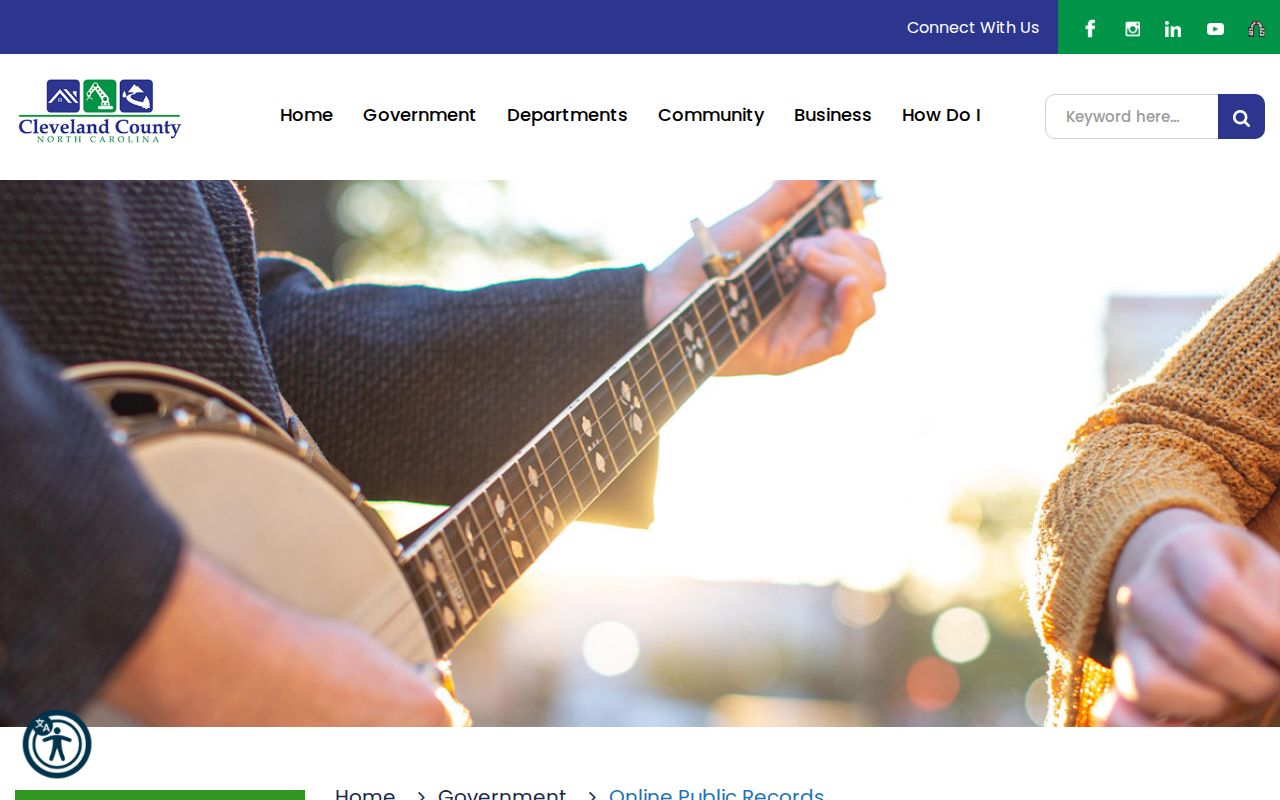
The hub links land records, GIS, taxes, vital requests, foreclosures, fraud alerts, ordinances, and the county request route. It is a switchboard, not a single combined name index.
Shelby Records Offices by Role
Three local counters hold different parts of a Shelby people search. The Register of Deeds records land instruments and issues local birth, death, and marriage certificates. The Clerk of Superior Court keeps civil, criminal, estate, divorce, guardianship, and special-proceeding files. City Hall holds municipal minutes, permits, planning files, code records, cemetery material, and releasable police information. Sending the same broad request to all three wastes time because no office is the custodian for every record.
Cleveland County Register of Deeds
311 E. Marion St., Room 151
Shelby, NC 28150
704-484-4834
Shelby City Hall
300 S. Washington Street
Shelby, NC 28150
704-484-6800
The detailed rules for copies, fees, exemptions, and requests belong with Shelby public records access. For a first search, the key is simply choosing the custodian whose work created the record.
The City of Shelby directory shows the municipal entry point and department navigation.
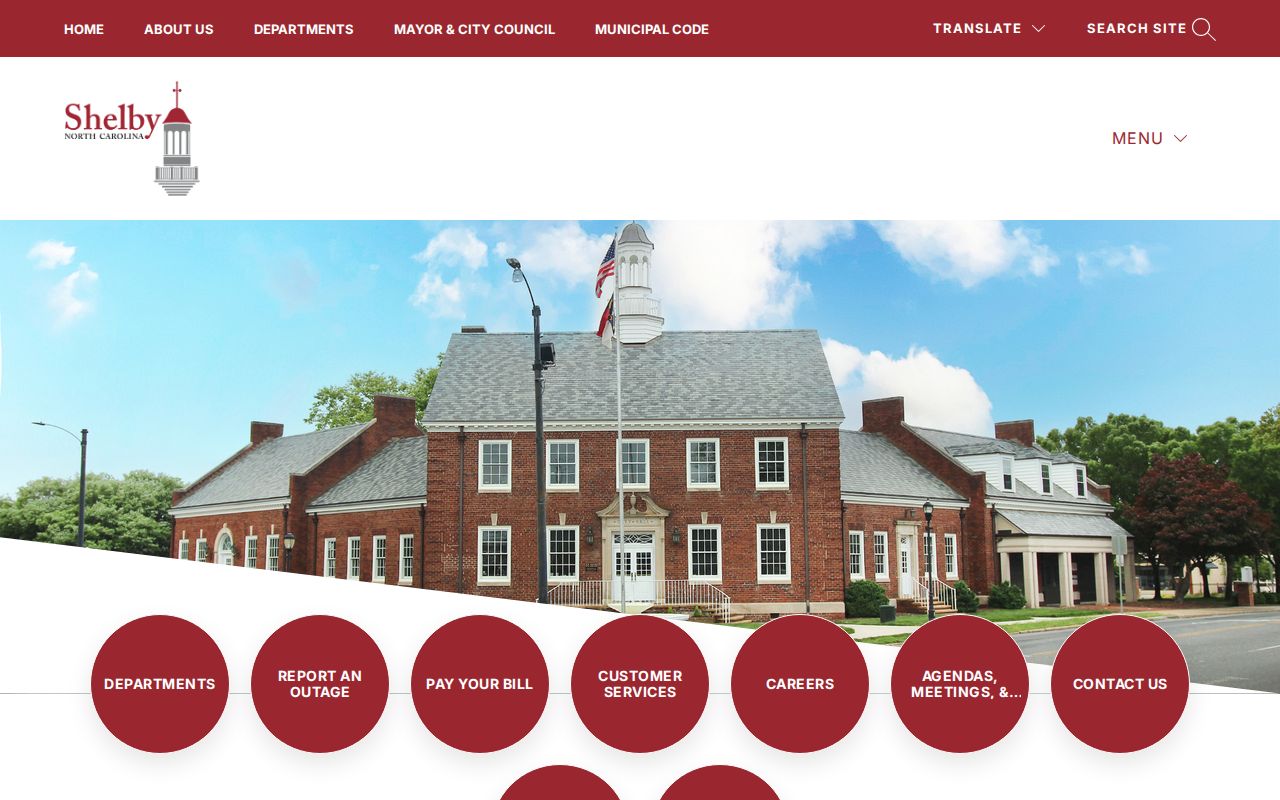
City records can connect a name to a public role, permit, board seat, or city event. They do not replace county deeds, tax files, elections, or state court records.
Cross-Check Shelby Address Records
A Shelby postal address does not prove that land lies inside the incorporated city. Postal names serve routing needs, while city limits decide whether municipal planning, permit, or code files apply. Cleveland County GIS and tax districts provide the better jurisdiction check. This geographic distinction matters before sending a request to City Hall or treating a city service record as proof about a parcel outside the boundary.
Four address terms prevent common errors. The situs is the physical property address. The mailing address is where the tax bill goes. A parcel number is the county’s account key. The deed’s legal description controls the land identity even when a street label changes.
- Situs
- The physical location assigned to the parcel.
- Mailing address
- The tax-bill destination, which may belong to an owner, agent, trust, or estate.
- Parcel
- The county identifier joining tax and GIS records.
- Grantor and grantee
- The party transferring an interest and the party receiving it in a deed index.
Note: A tax owner may not occupy the land, and a permit applicant may be a contractor rather than the resident.
Shelby Court Search Without Assumptions
Shelby cases run through North Carolina District and Superior Courts in Judicial District 39. There is no separate municipal-court name database. Statewide eCourts reached all counties in October 2025, making the North Carolina eCourts Portal the broad online starting point. Court Dates is narrower and focuses on calendars. The Cleveland County clerk remains the keeper of the official file, including older material that may need a terminal, legacy index, paper search, microfilm, or off-site retrieval.
Search a full legal name, surname and given name, middle initial, suffix, former name, or case number. Filter to Cleveland County and a useful date range. A result can name a plaintiff, defendant, petitioner, respondent, decedent, fiduciary, or attorney. It does not by itself show guilt or even an adverse outcome.
| Search field | Useful entry | Why it helps |
|---|---|---|
| Smart Search | Person, business, or case number | Finds a broad party or file match |
| County | Cleveland | Removes many statewide namesakes |
| Case category | Civil, criminal, infraction, or other type | Separates very different party roles |
| Filed date | A bounded date range | Narrows common names and later filings |
Juvenile, adoption, expunged, sealed, and protected exhibits are not ordinary public content. Use the case number to ask the clerk for a named public document rather than requesting everything connected to a person.
Note: Court Dates shows calendars, while the eCourts Portal and clerk file provide the broader case trail.
Vital Records for Shelby Families
Birth, death, and marriage certificates for local events begin with the Cleveland County Register of Deeds. Divorce decrees belong to the Clerk of Superior Court, while the state maintains a separate divorce certificate or report. The North Carolina Office of Vital Records serves statewide needs when the county of the event is unknown or a state-level service is required.
Certified certificates are not an open name database. North Carolina law requires identity and statutory eligibility, and the county asks for photo identification plus proof of the requester’s relationship or authority. The local certified-copy fee is $10. Mail requests also require the county form, proper payment, and a self-addressed stamped envelope. Marriage certificates before 1962 should be sought from the Register of Deeds that issued the license.
Genealogy follows a different trail. Indexes, older original records, Archives microfilm, church registers, cemetery files, obituaries, and census schedules may document an event without granting eligibility for a certified copy. North Carolina does not publish one simple age rule that automatically opens every certificate, so do not assume a fixed 100-year or 50-year release.
Note: An index entry can support research without making the researcher eligible for a certified certificate.
Trace Shelby Property Records
An old address can lead to a present owner, a prior deed, an estate, or a later mailing address. Search the tax roll by owner or property address. Copy the owner name exactly as styled, then record the situs, mailing address, parcel number, legal description, district, and deed book and page. Open GIS to confirm parcel geometry and municipal limits. Next, carry book and page to the deed index and inspect the grantor, grantee, instrument date, and prior-deed reference.
The Cleveland County tax and property system is the fastest current owner route.
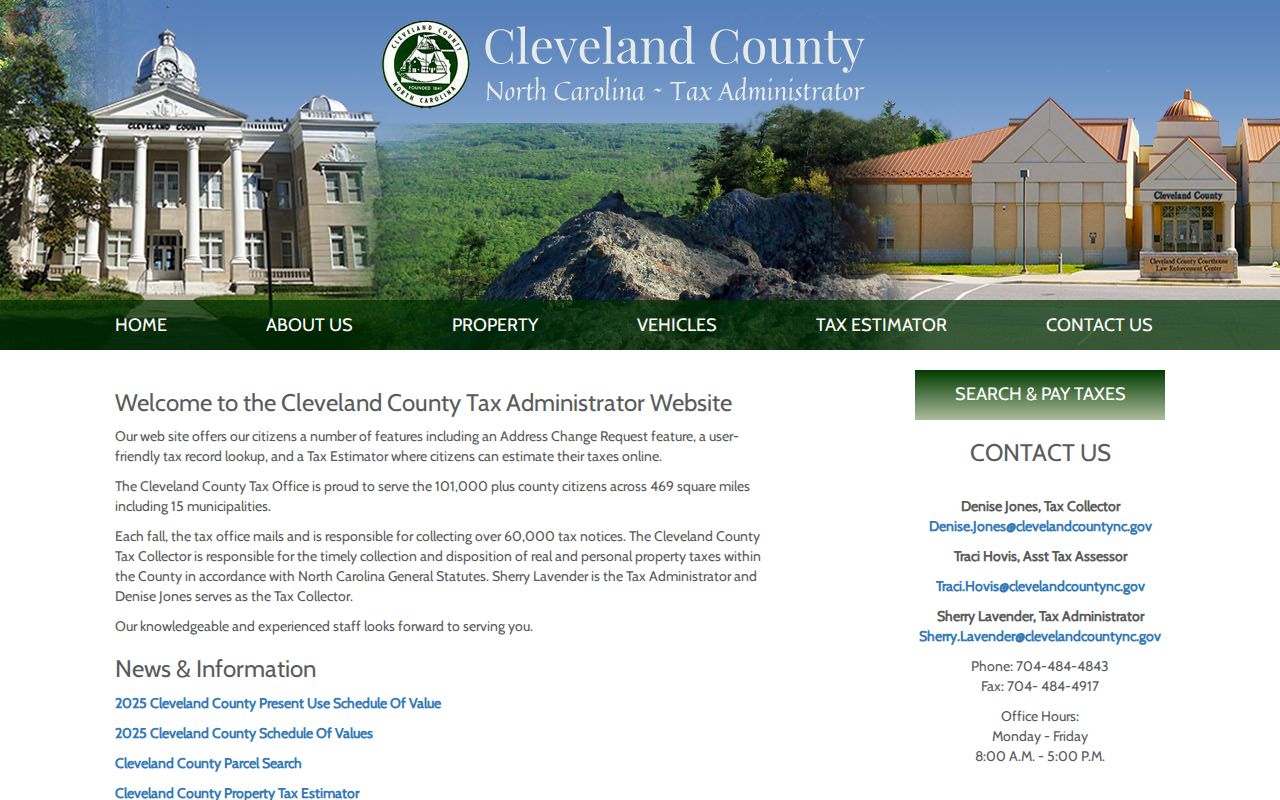
The tax card bridges an address search to recorded land records. Ownership can lag after a recent filing, and a mailing address is not proof of where the owner lives, so compare the result with the deed date and another dated record.
What if the online deed index stops too late? Take the tax card’s book and page to the Register of Deeds counter. Older books, microfilm, Archives holdings, and FamilySearch catalog material can extend a Shelby property search beyond the web index, whose exact starting year was not published on the county pages reviewed.
Shelby Voter Search Boundaries
North Carolina’s individual voter lookup searches first name, last name, optional middle initial and birth year, county, and status. A match can show registration details, jurisdictions, polling place, sample ballot when available, absentee information when applicable, and participation history. It never reveals the voter’s ballot choices. Full public files also omit birthdate, Social Security number, and driver-license number.
The NCSBE Voter Search offers a Cleveland County filter that helps separate namesakes.
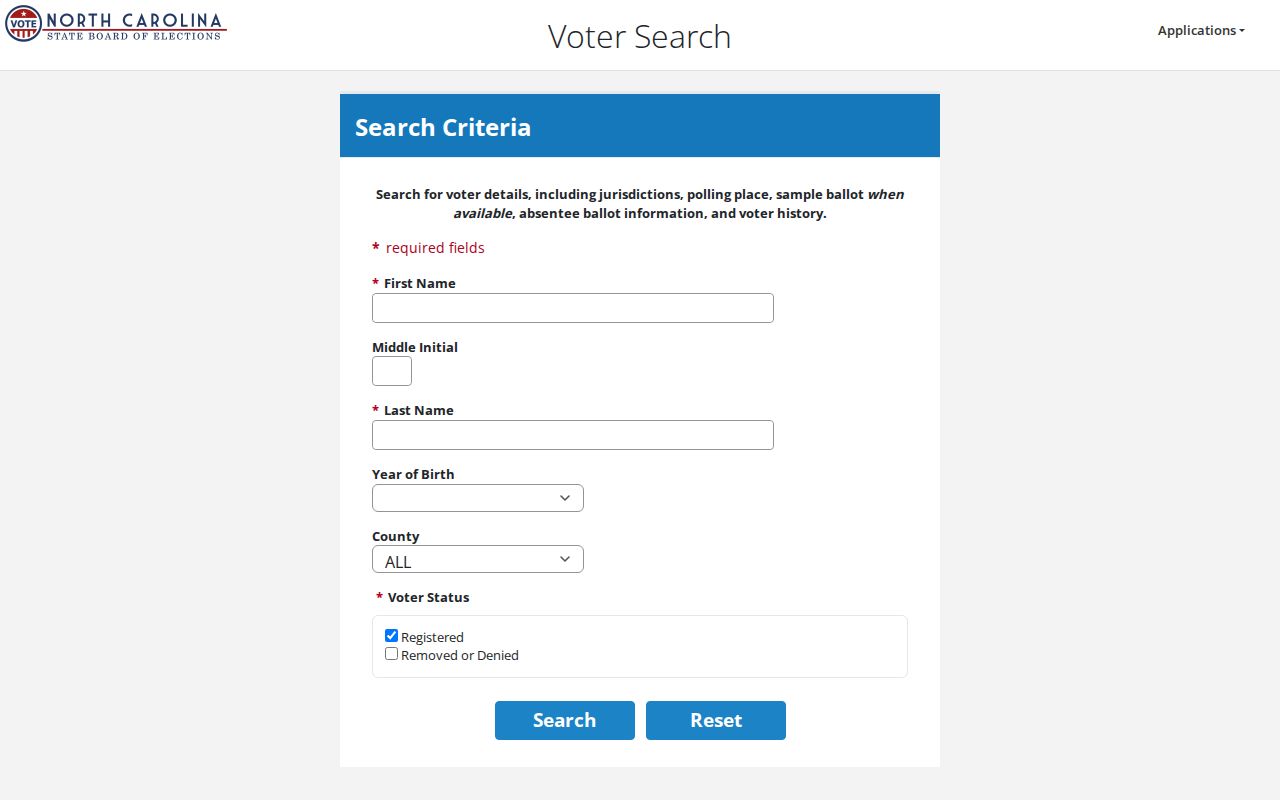
A missing result can reflect a spelling, name form, status choice, county choice, or removed record. It does not prove that the person never registered. The dedicated Shelby voter records lookup covers the public file, protected fields, weekly downloads, local statistics, and the county elections office.
Shelby Offender Records and Safety
Corrections, registry, court, and police records answer different questions. North Carolina Adult Correction publishes current and former offender identity and custody history. The SBI registry offers official identity and location search modes for lawful safety use. A Cleveland County live detention roster was not verified in the official sources reviewed, so current local custody questions should go to the Sheriff or Detention Center. Court files remain the place to confirm charges, disposition, and case context.
The NC Adult Correction search accepts names, offender number, gender, race, and an age range.
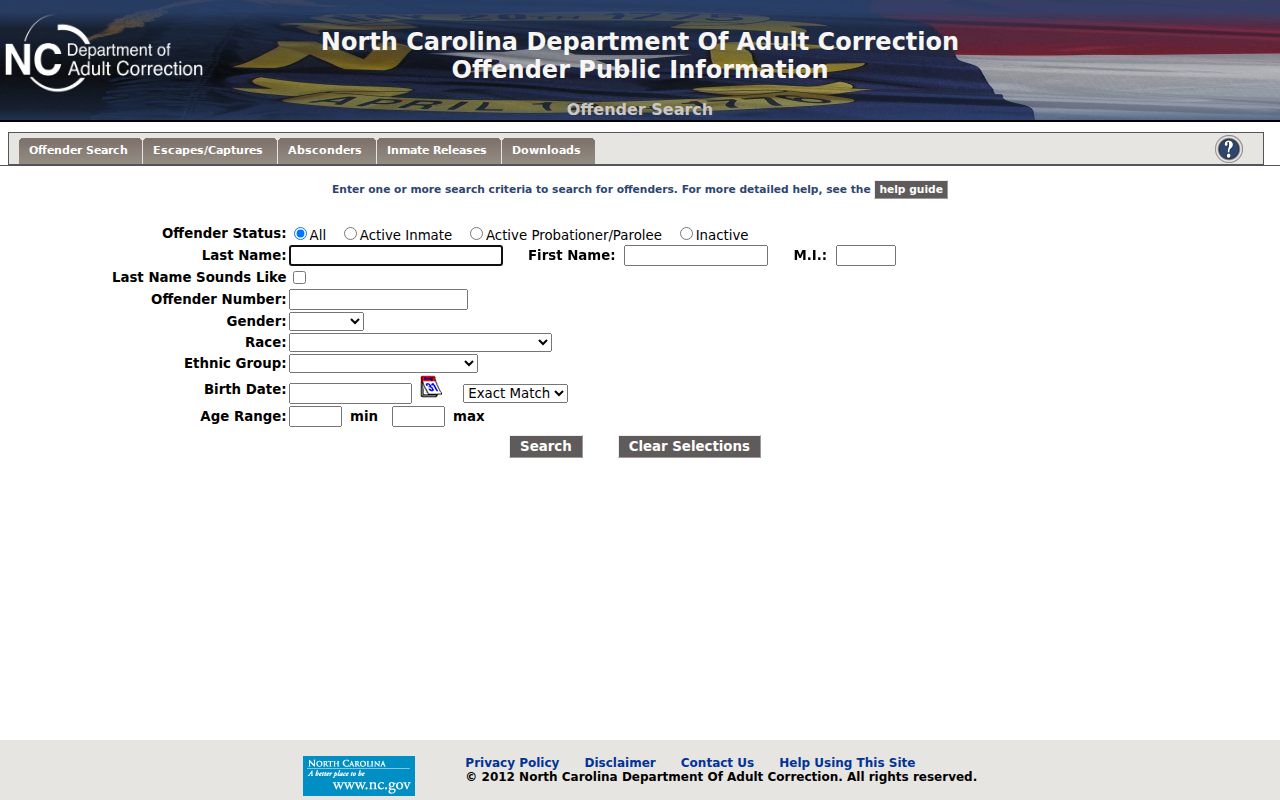
A corrections result is not a complete criminal history. Verify the offender number, dates, status, and county against the official court case before drawing a conclusion.
The NC SBI Sex Offender Registry provides name, address, location, radius, and map modes.
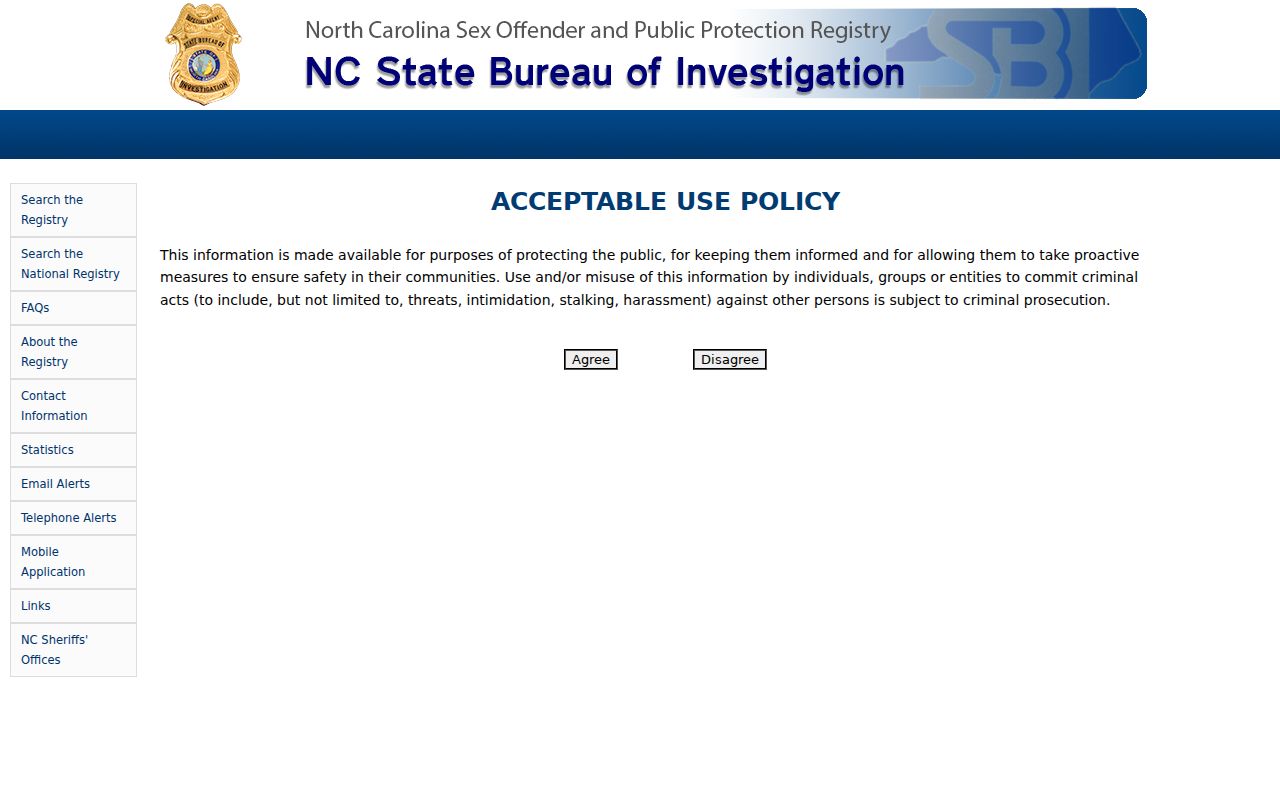
Compare the official photo, physical description, conviction details, and identifiers. A registered address does not establish that every other person at that address is listed.
Shelby Business and License Search
A business name can expose several roles. The North Carolina Secretary of State business search can show the entity’s legal name, status, formation date, registered agent, principal office, officials where filed, annual reports, and document images. A registered agent accepts service for the entity and is not necessarily its owner. Capture both role and filing date before linking a person to a Shelby company.
Professional identity is board-specific. Medical, nursing, State Bar, contractor, real-estate, and other boards publish their own verification tools with license status and public discipline where applicable. Search by exact name and license number when known. Business permits, deeds, health inspections, and local assumed-name material can add evidence, but applicant, owner, licensee, and company official are distinct roles.
| Official source | Strongest fact | Important limit |
|---|---|---|
| Secretary of State | Entity status, agent, filings | Agent may not own the firm |
| Licensing board | Credential and current status | Practice details change |
| County deed or permit | Dated role tied to land or work | Role may not prove residence |
| Commercial compilation | A possible lead | May merge people or carry stale data |
Shelby Estate Records for Heirs
An heir search has a clear first record: the decedent’s estate file at the Clerk of Superior Court. Public portions may name the personal representative, heirs, notices, inventories, receipts, sales, and distributions. Use the exact estate file number and date. Then compare the file with an obituary, cemetery record, deed, and any later land transfer. Each source contributes a different kind of family evidence.
Older Cleveland County estate materials may also sit in State Archives holdings. Newspapers can add married names and relatives, while deeds show how land passed from the estate. Cemetery and funeral notices help distinguish same-name residents, but family-supplied statements still need support. This lawful family-history trail is stronger than a bare name match because it joins role, event, date, and place.
Use records with care. Public access is not permission to stalk, threaten, or harass anyone. Never try to reconstruct an address protected by North Carolina’s confidentiality program.
Note: Estate notices and obituaries should be compared because each can omit or simplify family relationships.
Search Shelby Before 1841
Cleveland County was formed in 1841 from parts of Lincoln and Rutherford counties. A Shelby family or parcel that predates county formation may therefore appear under a parent county. Start with the federal census, then follow tax lists, deeds, estates, marriages, church registers, and newspapers in the county that held the territory at the time. From 1850 forward, census schedules name household members; earlier schedules generally name the head and tally other residents.
Statewide vital administration began in 1913, so earlier births and deaths often need several forms of proof. Church, cemetery, Bible, estate, census, and newspaper evidence can fill gaps. Search married and maiden surnames, initials, “Mrs.” forms, phonetic spelling, and OCR errors. African American residents may be missing from or separated within older printed sources, making post-1870 census, church, school, tax, deed, cemetery, and community records especially important.
Shelby Newspaper Records Since 1861
The official State Archives newspaper guide documents a fragmented but valuable Shelby trail. It begins with the Mountain Eagle in 1861, then includes the Cleveland Banner, Shelby Banner, scattered Shelby Aurora issues, New Era, Shelby Review, Highlander, Cleveland Press, Cleveland Times, and Cleveland Historian. These papers can name relatives, addresses, businesses, military service, marriages, deaths, legal notices, and community events.
A partial reel changes search tactics. A failed keyword query does not show that no notice existed. Browse the weeks around a known event, try alternate paper titles, and search initials, former surnames, and OCR variants. Ask the Archives or local library about longer runs of The Shelby Star and current newspaper databases rather than assuming the state guide contains every local issue.
Protect Privacy in Shelby Searches
North Carolina records have firm public and confidential sides. Voter files protect full birthdate and key identifiers. Certified vital copies require eligibility. Military discharges recorded with the Register of Deeds are restricted. Juvenile, adoption, expunged, sealed, criminal-investigation, personnel, and motor-vehicle records follow their own limits. A public index does not override those rules or create a right to every image behind it.
The North Carolina Address Confidentiality Program provides eligible survivors with a substitute address and mail forwarding. Participation does not erase all older records, but researchers must never combine sources to defeat the protection. Use public data only for lawful personal research, civic review, family history, scam checks, or safety purposes.
Note: Official results change, so save the record date and verify any important fact with the office that maintains it.
When Shelby Web Records Stop
Online access is only one channel. The Cleveland deed index does not publish its exact first online year on the county pages reviewed. Older court cases may remain in a legacy system, paper file, microfilm, or storage. Historical poll-book years and exact Shelby city-directory runs also need an office or shelf-level check. Those gaps call for a precise fallback, not a claim that the record does not exist.
Bring the strongest identifier to the counter: deed book and page, parcel, case number, event date, full name variants, or a short date range. Ask whether the item is on a public terminal, in an office book, on microfilm, at the State Archives, or available by mail. Request a named existing record in its current electronic format when possible. Keep any fee estimate and ask for the statute if access is denied.
A Shelby people search works best as a dated chain of evidence. One record points to the next, while the office copy settles what a portal preview cannot.